

Your Inventory Numbers Are Lying to You
You got the big deal. But do you actually have the products?
You just landed your biggest opportunity yet. A retailer wants to carry your products in 50 stores. You're celebrating with champagne.
Then they ask: "How many units do you have in stock right now?"
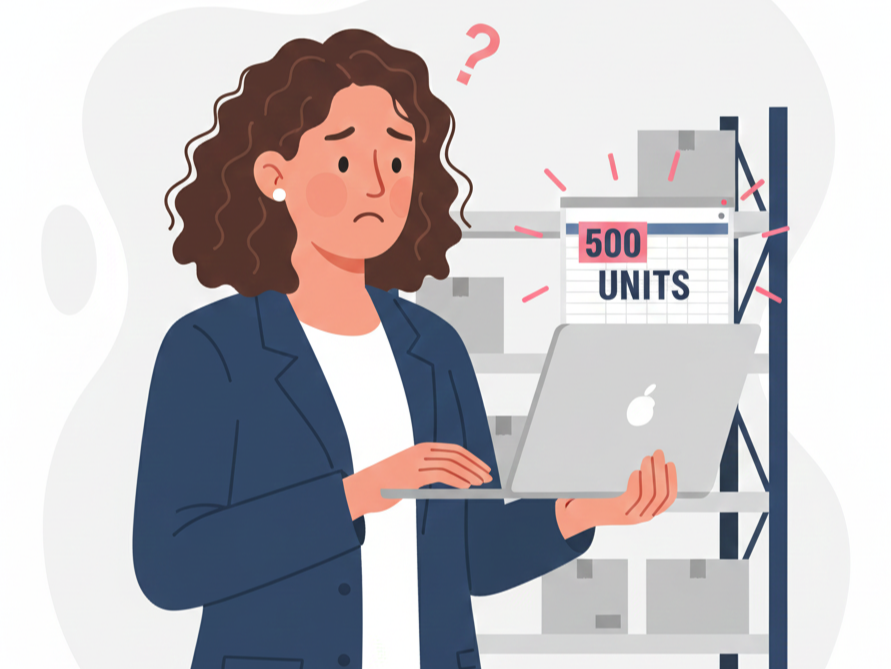
You check your spreadsheet. It says 500 units. Perfect.
But here's the problem: your warehouse only has 420 units. And you have no idea where those missing 80 went. Were they samples? Did someone make a counting mistake? Did they get damaged?
That retailer? They won't wait for you to figure it out. And they definitely won't give you a second chance.
The Story Every Growing Business Tells Themselves
I recently worked with a startup doing about $500K annually. They got a major distribution deal, the kind that could double their revenue.
Day 1 of the rollout, they shipped the wrong products to 12 different stores. Why? Because their product tracking system was a mess. One spreadsheet said "lavender lotion." Another said "lav lotion 8oz." Their warehouse team called it "purple bottle."
Same product. Three different names. Total chaos.
The distributor wasn't happy. And fixing it cost them thousands in emergency shipping fees and weeks of rebuilding trust.
The real problem wasn't that they didn't have the products. The problem was they couldn't accurately track what they had.
Think of it like this: Imagine someone asks you to bake 50 batches of cookies for their wedding. You confidently say "yes!" because you think you have enough flour, sugar, and eggs.
But you never actually counted what's in your pantry.
You start baking batch #30 and realize you're out of sugar. Now you're scrambling to the store at midnight, the wedding is tomorrow, and you look unprofessional.
That's what happens when your inventory numbers don't match reality.

The 3-Step "Count Before You Promise" Framework
Here's how to make sure your numbers are actually real:
Step 1: Do a Blind Count This Week
Pick your top 3 best-selling products. Don't look at your spreadsheet first. Go to your warehouse (or wherever you store products) and physically count them. Write down the number.
Now compare it to what your system says. If the numbers don't match, you have a tracking problem that will bite you during your next big opportunity.
Step 2: Create One Single System
Your spreadsheet says one thing. Your warehouse manager's notebook says another. Your online store says something else. This is called "multiple sources of truth" - which really means "nobody knows the truth."
Pick one place where the real numbers live. Could be a simple spreadsheet, could be an inventory app. Doesn't matter which tool. What matters is everyone updates the same place every single time.
Step 3: Track Every Single Movement
Every time a product leaves your warehouse - whether it's for a customer order, a sample, a gift, or your mom - write it down immediately. Not at the end of the day. Not when you remember. Immediately.
The "I'll remember later" approach is why your numbers are wrong in the first place.

Your Takeaways:
✔️ Wrong inventory numbers kill big opportunities faster than bad products do
💡 If your system says 500 but your shelf says 420, those missing 80 units represent lost revenue and broken trust
🏃 This week: Count your top 3 products by hand. If the number doesn't match your system, you've got work to do before your next growth opportunity
Ready to Stop Guessing?
Most founders discover they have $25K-$50K worth of products just sitting in the wrong place or counted wrong. Imagine what you could do with that cash actually working for you.
Let's find out where your numbers are lying to you.
P.S. - That startup? After we fixed their tracking system, they cut their fulfillment time by 40% and found $30K worth of products they didn't know they had. Your numbers might be hiding your next breakthrough.
